.jpg?sfvrsn=4f8a26d1_0 "SFM for social development ©FAO/Eric Lartey")
SFM for social development
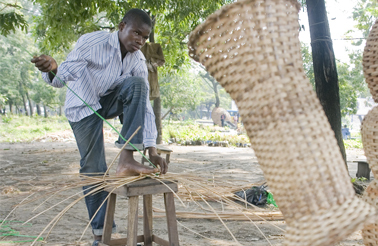
Forests and trees offer a wide range of products and services, and their vital role in supporting rural livelihoods and food security necessitates a people-centered approach to forestry. Forests generate income through the sale of forest products that can also complement incomes from other sectors such as agriculture. Additionally, forests serve as sources of food, medicine, and fuel for over a billion people worldwide, with approximately 2.4 billion people using fuelwood for cooking.
The social dimension of SFM encompasses concepts such as participation, fairness, access, use rights, worker safety, gender equity, and conflict management in forest-affected communities. These aspects must be given due attention in SFM efforts, as fairness is crucial in the distribution of benefits and costs in rural forest areas. Implementing SFM should aim to reduce inequality, promote locally owned enterprises, and enhance working conditions.
Those directly involved in or impacted by forest management should have a say in setting forest management objectives. Decisions imposed on stakeholders without consultation lack legitimacy and can lead to conflicts. Recognizing local people as key stakeholders and involving them in decision-making fosters positive outcomes for livelihoods, rural development, and forest conservation. Ensuring equitable benefit sharing may require investment in housing, education, healthcare, and resource rights allocation.
SFM implementation involves monitoring social indicators and addressing negative impacts, such as conflicts over benefit sharing. The concept of community-based forestry aims to increase local involvement in governing and managing forest resources. Policy-makers have high expectations for community forestry, including addressing climate change, improving law enforcement, promoting forest restoration, and more. Community forestry has the potential to contribute to the social objectives of SFM and improve local livelihoods.